Stablecoins in Canada: A Back-End Shift With Strategic Urgency
At this Payments Canada panel, leaders from crypto, fintech, banking, and global networks aligned on a clear message: stablecoins are no longer experimental. They are becoming a foundational layer of modern payments — but in Canada, their impact will likely begin out of sight.
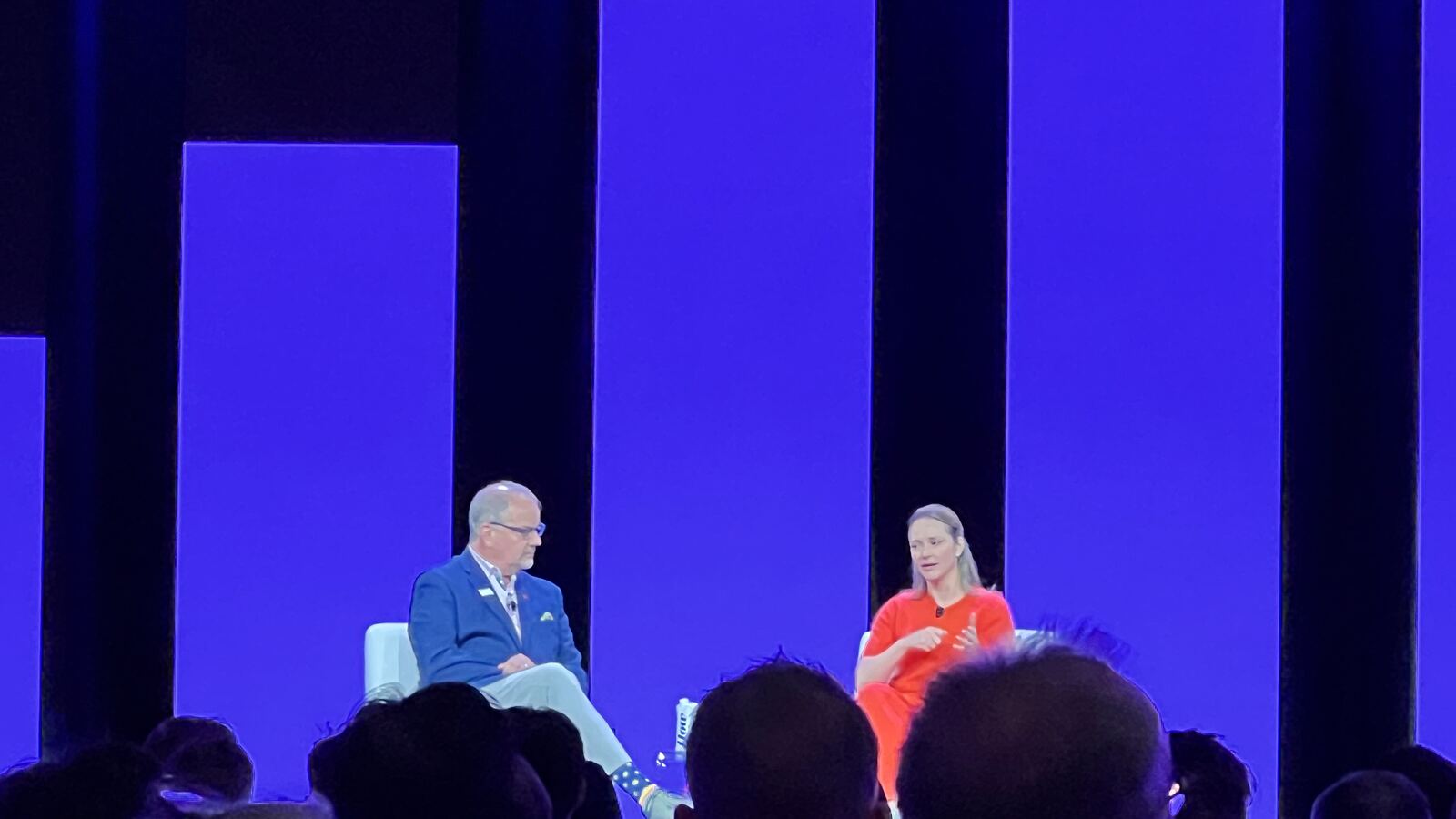
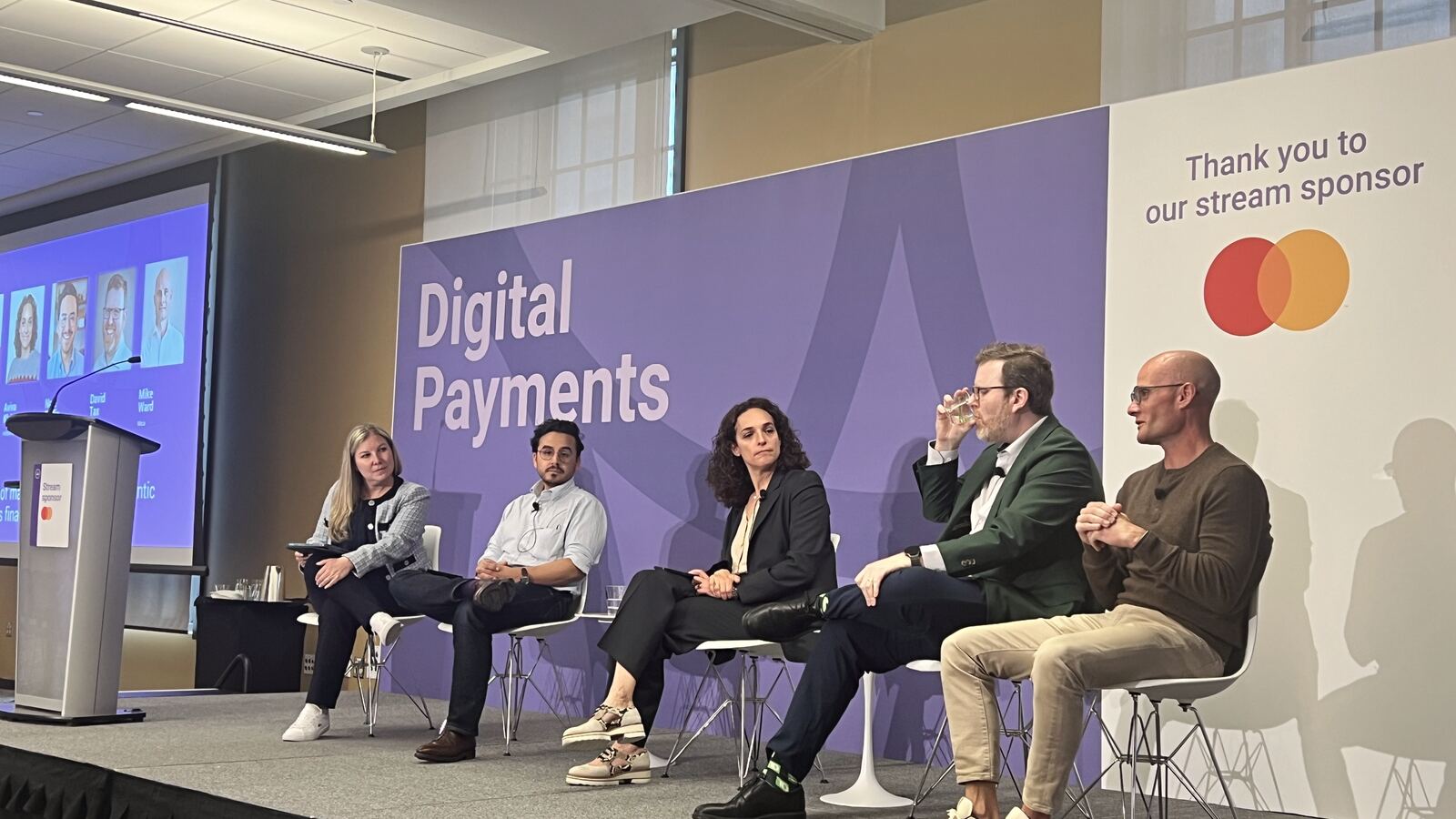
The panel was moderated by Eric Richmond, General Counsel & Head of Business Development at Shakepay, the Montreal-based crypto and fintech platform that serves over 1.6 million Canadians. His opening framing set the tone: a moderator who himself works inside a regulated crypto-native fintech, anchoring a panel that spanned the rest of the Canadian payments ecosystem — a fintech infrastructure player, a major bank venture arm, and a global card network.
Sereena Boparai (Paramount Commerce) — A View From the Rails
Sereena Boparai, Chief Revenue Officer at Paramount Commerce, brought the view from one of Canada's largest account-to-account payment service providers. "We are an account-to-account payment service provider… and we expect to process over $10 billion in payments this year across Canada," she said, highlighting the scale at which traditional rails continue to operate alongside the emerging stablecoin conversation.
She used that vantage point to make the panel's most concrete operational point about why stablecoins matter to existing rails: the hidden friction of treasury and timing.
"People are sending funds to us to facilitate their payments… and they want to sit on those funds from a treasury monitoring perspective for as long as possible."
To ensure transactions succeed, businesses pre-fund accounts and manually manage liquidity. "They're moving that money in advance, trying to think about clearing time and making sure that their balance is available once that payment comes around" — a process she called "a difficult thing to manage… another friction point."
Even with stablecoins, cost and currency friction remain. "We always have to level the USDC… we have to pivot from CAD to stablecoin," she noted, highlighting the ongoing complexity of currency conversion for Canadian operators in practice.
On the strategic side, Boparai delivered the panel's signature line on urgency:
"I don't think there's really any losing from the adoption. I really just think the losing is falling behind."
She added that "the lack of having it as an option also creates friction for us as a business within fintech in Canada" — a direct call for the Canadian policy environment to keep pace with what's already happening at the rails.
Philppe Daoust (NAventures, National Bank of Canada) — The Bank-Adjacent Innovation Model
Philppe Daoust, Managing Director of Venture Capital at NAventures, the venture arm of National Bank of Canada, described a model designed to bridge incumbents and innovators: "find fintechs that are closely aligned with the strategy of the bank, invest in them, and adopt them at the bank." He noted that "about 90% of the companies we invested in end up being used by the bank" — a remarkable adoption rate that reflects an unusually tight integration between corporate venture and operating business.
That perspective gave Daoust an unusually pragmatic read on where stablecoins will land in Canada. His framing of the early use case was the cleanest articulation of the panel:
"If you want to know where it's going to go first, just follow where the biggest pain is. And the biggest pain today… is cross-border payments."
He contrasted that with Canada's relatively well-functioning domestic rails: "We already have a system of payment in place that is well-run." The implication: do not expect stablecoins to displace domestic Canadian payment rails near-term. Expect them to compete first where Canadian rails were never the primary solution — international flows.
He also offered the panel's sharpest strategic warning. If Canada moves too slowly, adoption will still happen — but outside Canada's control. The risk, in his framing, is not whether stablecoins succeed, but which currency underpins them.
Jay Dorey (Visa Canada) — The Global Network Perspective
Jay Dorey, Head of Canada Government Affairs at Visa Canada, gave the discussion its global perspective and its most concrete commercial data point. He described Visa as operating at "the intersection of trusted, secure and scalable payments and money movement globally," and noted that the company is "increasingly… building, innovating and experimenting on chain."
Dorey was the speaker who drew the clearest line between today's reality and Canada's near-term opportunity:
"I don't think that's Canada's story,"
he said, referring to the consumer-driven stablecoin adoption pattern seen in other markets. Instead, he pointed to back-end transformation, citing "a pilot that we're running on stablecoin settlement for some cross-border flows." And he disclosed the headline figure of the panel: Visa stablecoin settlement is already a $7 billion run-rate business.
His characterization of the technology fit:
"It really is a technology that solves those high friction, potentially high-cost areas."
For Dorey, the relevant Canadian question is not if but where — and he is direct that the answer is cross-border settlement first, consumer payments much later, if ever.
B2B First, Consumers Later
Across the panel — Boparai, Daoust, and Dorey, with Richmond moderating — alignment was striking. Business-to-business use cases are already gaining traction. "We do see a lot of businesses now taking on stablecoins for their day-to-day settlement," the panel observed — cross-border transactions, supplier payments, and internal treasury flows.
Consumer adoption, however, remains uncertain. "For payments… it's still in its infancy," the panel agreed, with no clear indication yet of how stablecoins will translate into everyday consumer behaviour in Canada.
The immediate impact is being felt most acutely by globally operating businesses — particularly mid-sized firms managing increasing complexity. As one participant described: when companies are running international payroll, paying suppliers across borders, and trying to expand into new markets, "those are becoming very difficult."
An Inevitable Shift — With Timing as the Key Variable
Despite differences in perspective, the panel converged on one conclusion: stablecoins are inevitable.
From the crypto-native moderator's seat at Shakepay, to the account-to-account rails view at Paramount Commerce, to the bank-venture lens at NAventures, to the global network seat at Visa Canada — the ecosystem is aligning around a shared trajectory. Stablecoins are already reshaping cross-border settlement and beginning to influence treasury management.
For Canada, the question is not adoption — but speed. As the panel made clear, the greatest risk is not disruption, but delay.
Key Takeaways
- Shakepay serves 1.6M+ Canadians (moderator Eric Richmond's company); Paramount Commerce expects to process $10B+ in 2026 on account-to-account rails.
- NAventures (National Bank of Canada) adopts ~90% of its fintech investments into the bank — a model worth studying for any Canadian bank-fintech relationship.
- Visa stablecoin settlement is already a $7B run-rate business today, primarily for cross-border flows.
- Canada's stablecoin story is back-end first — cross-border settlement — not consumer payments. "I don't think that's Canada's story" — Dorey.
- Treasury management & pre-funding remain a hidden friction even with stablecoins (Boparai's operational point).
- B2B adoption is happening now; consumer adoption is "in its infancy."
- "I don't think there's really any losing from the adoption. I really just think the losing is falling behind." — Boparai.
- The real strategic risk is not whether stablecoins succeed in Canada — it's which currency underpins them (Daoust).