Embedded Finance, Regulation, and the New Payments Playbook in Canada
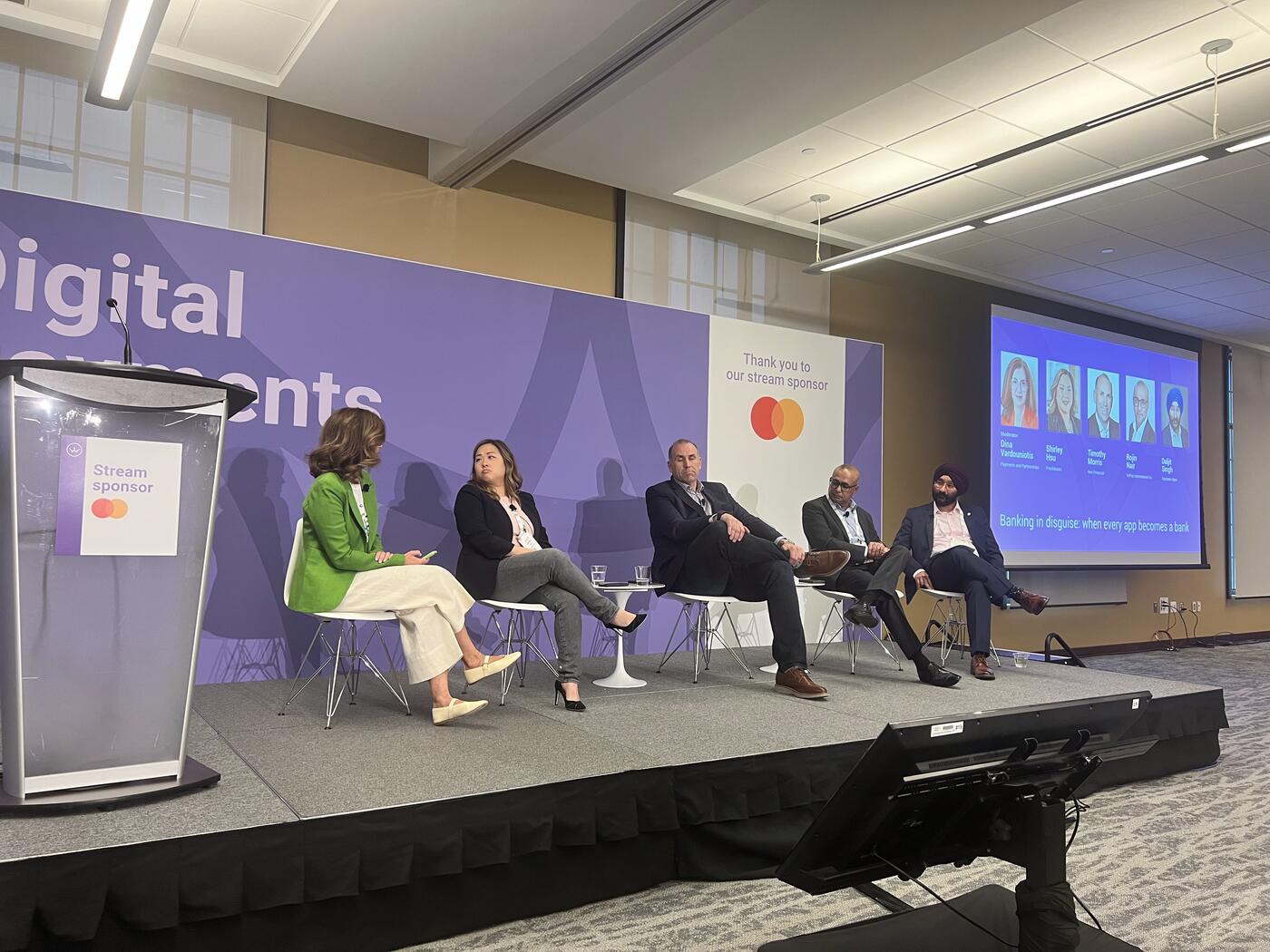
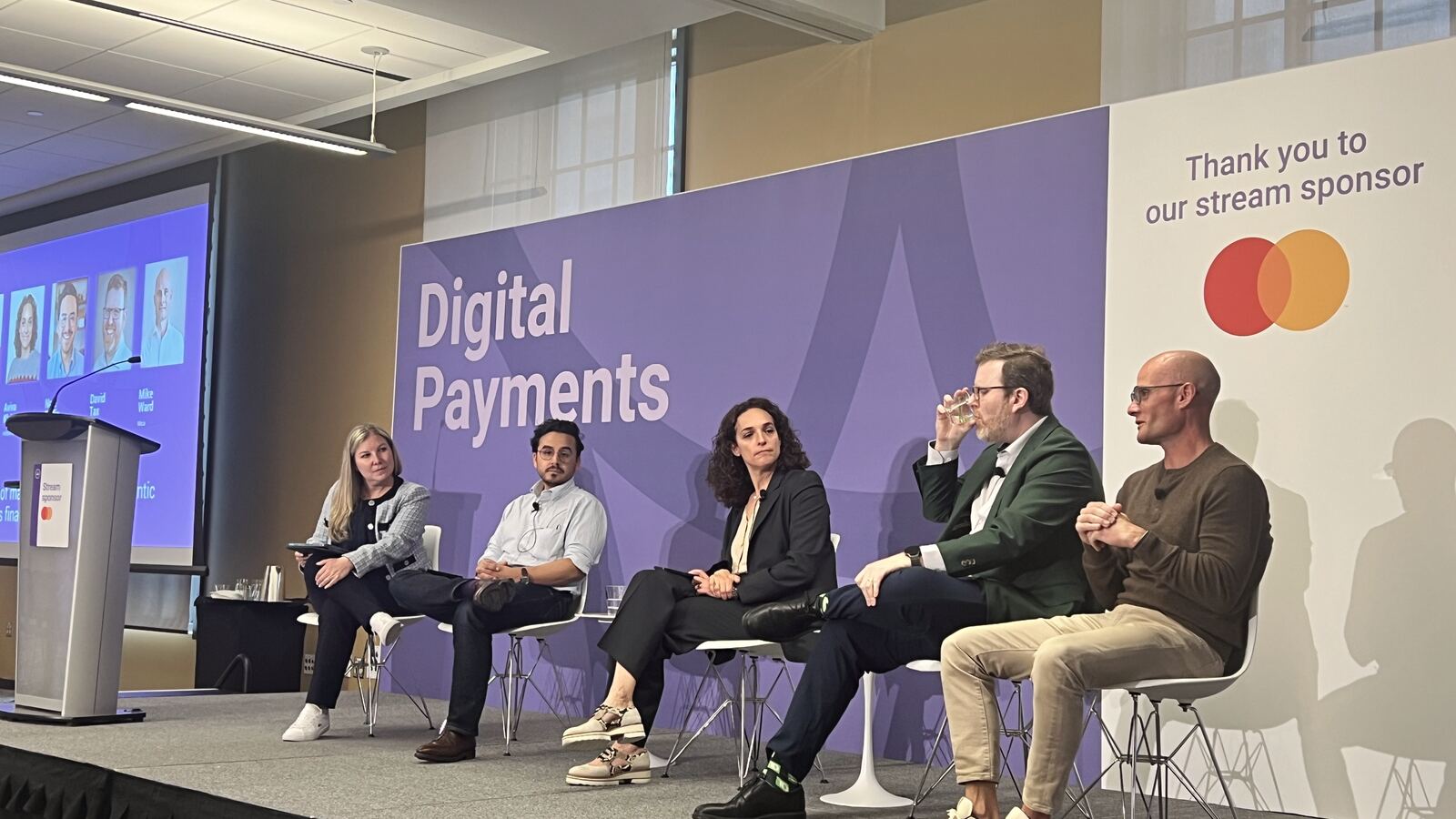
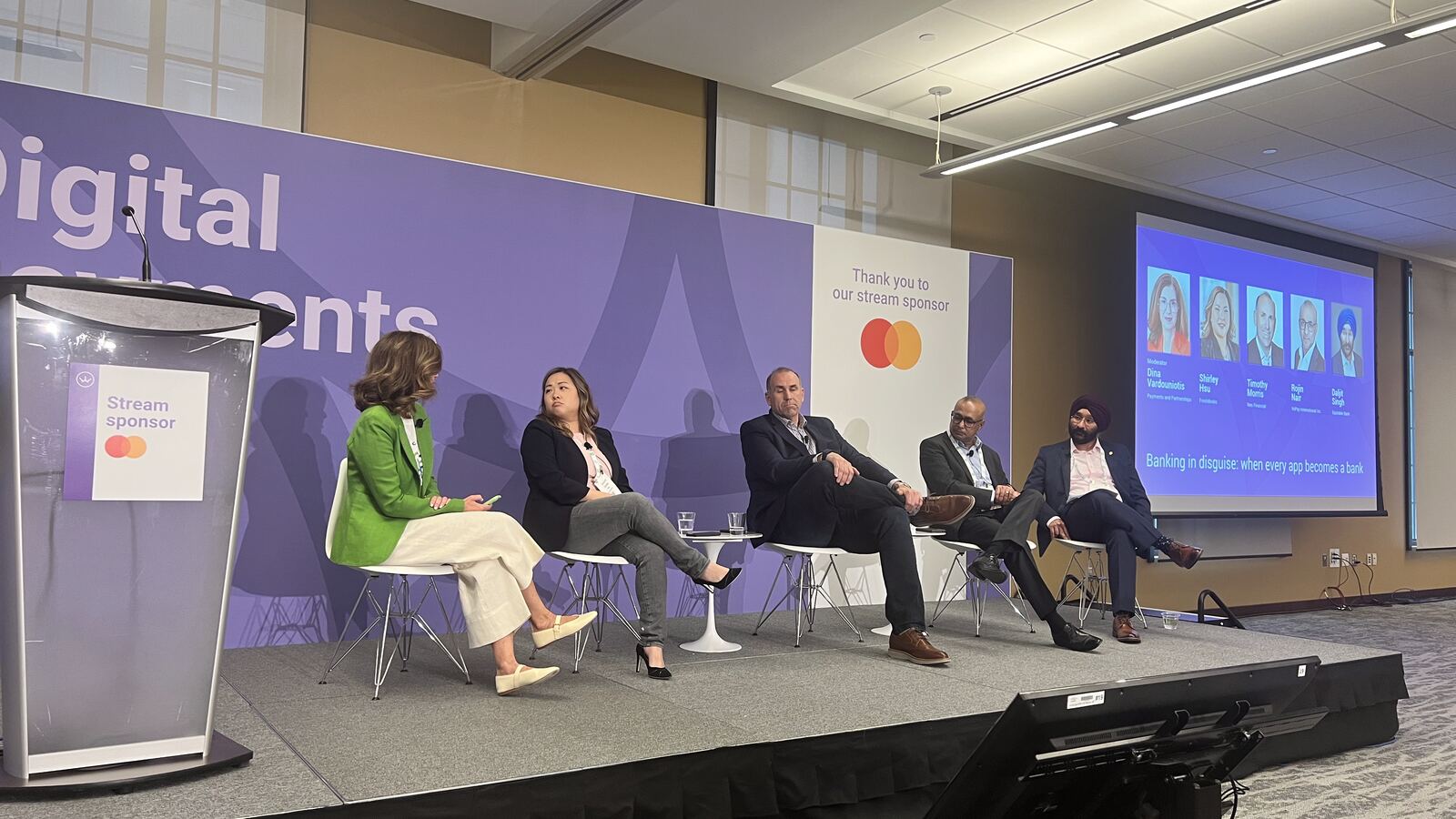
At the Payments Canada Summit, a panel of industry leaders from banks, fintechs, and SaaS platforms explored a system in transition — one shaped by regulatory acceleration, infrastructure shifts, and a growing need for collaboration. Moderated by Dina Vardinounis, the discussion highlighted a central tension: while innovation is accelerating, the rules governing trust, accountability, and ownership are still evolving.
Vardinounis set the stage by pointing to "two converging forces" — regulation "moving very, very quickly" and infrastructure undergoing "massive change." The conversation that followed made clear that Canada's payments ecosystem is approaching a critical inflection point.
Who Owns the Customer?
One of the most debated questions was ownership in a layered, embedded finance ecosystem.
Daljit Singh of EQ Bank offered a regulatory perspective grounded in accountability. While acknowledging collaboration across the ecosystem, he emphasized that "from the regulatory lens, the customer belongs to the sponsor bank." In practice, this means that "any transaction that goes as part of this entire design… it's finally the sponsor bank which is always the first one which is being asked… what exactly happened."
At the same time, Singh made it clear that the model cannot function in isolation. "It cannot be a silo. It has to be the shared responsibility," he said, pointing to the combined roles of fintechs, processors, and banks across onboarding, compliance, and transaction monitoring.
Rojan Nair of VoPay challenged the premise of ownership itself. "You don't 100% own customer in isolation, any one of us," he said, describing an ecosystem where "we share the data, we share the instructions, we share the context." In his view, embedded finance is inherently cooperative: "It's a completely symbiotic ecosystem, and it's not a monopoly."
Timothy Morris of Neo Financial pushed the argument further. "When we talk about ownership of a customer, it's kind of an industry talking to itself," he observed. The real shift, he argued, is toward customer agency: "people… realize that they own their data, they own their information."
The Embedded Finance Trade-Off
For Shirley Hsu of FreshBooks, embedded finance is no longer optional — it is a natural extension of how small businesses operate.
"Our customers are on our apps every day," she explained. "It just makes sense for the financial aspect of their business to also live on it." But turning that logic into a scalable model requires careful trade-offs.
Hsu outlined three approaches:
- A gateway model with modest returns
- A "payment facilitation light model" with higher margins
- A full MSB model with maximum control but significant operational burden
FreshBooks ultimately chose the middle path, concluding that "the margin increase… and the team that was required just didn't make sense."
Even so, the complexity of partnerships introduces friction. "It's super confusing to the small businesses that are using it," Hsu said. "Do I talk to FreshBooks or do I talk to Stripe?" Her conclusion was pragmatic: "your contracts need to be super clear and clean," and coordination across partners is essential to protect the user experience.
From Payments to Context
As pricing pressure turns payments into a commodity, value is shifting elsewhere.
"If you offer payment for 10 cents, somebody's going to offer it for 9 cents," Nair said. "We started realizing the value is around what happens around that payment."
He described how middleware can act as an intelligence layer by connecting payroll, lending, and insurance systems. In one example, this allows providers to anticipate financial stress before it happens: "tomorrow if I don't pull that money… [the customer] is going to have an NSF. So it's my job… to give a notification… so he doesn't end up NSF."
This, Nair emphasized, is "data sharing and context for the benefit of the customer."
Regulation as an Enabler
Across the panel, there was consensus that Canada's regulatory environment is evolving — and increasingly enabling innovation.
Singh pointed to recent developments, including faster licensing processes and policy reforms. "The regulators have started changing," he said, noting that a recent approval involving EQ Bank was completed "in three months' time… the fastest approval… in the last 20 years."
Morris highlighted Neo Financial's own milestone: "we became a member of Payments Canada… a massive step forward for a traditional non-bank." At the same time, he acknowledged lingering friction, citing the inability to display the CDIC logo despite meeting safeguarding requirements.
Still, the direction is clear. As Singh put it, "we are at the right inflection point right now."
An Industry Goes on Offense
Perhaps the most telling shift is cultural.
"I'm seeing an industry that is taking an offensive mindset for the first time in a long time," Morris said. He contrasted this with a past defined by defensive positioning, where organizations focused on survival rather than growth.
Now, policymakers and market participants are acting in tandem. "We're seeing concrete actions and outcomes," he noted, calling the shift "very encouraging."
Hsu echoed this urgency, urging Canadian companies to think beyond conventional models. "I want us to get really creative… figure out those creative partnerships that's going to drive the whole opportunity," she said.
Liquidity, Small Businesses, and Real-Time Payments
While much of the discussion focused on infrastructure, Nair brought the conversation back to fundamentals: small businesses need cash flow.
"We have 3 million small businesses… they need cash flow, they need capital," he said. Delayed payments — often tied to traditional invoicing cycles — create systemic friction.
The solution lies in faster rails and embedded tools: "push to card, push to wallet… pay-by-link… instant pay-by-link in invoices." The impact is immediate. "With cash coming in real time, that's liquidity that goes back to the economy."
Rethinking Physical Infrastructure
The conversation also touched on how physical distribution is being redefined in a digital-first ecosystem.
Responding to a question from Eyal Sivan, Singh discussed EQ Bank's acquisition of PC Financial and the new capabilities it brings, including access to "2,500 Loblaw stores," "18 million customers" through the Optimum program, and "600 ATMs."
Rather than replicating traditional branches, Singh hinted at a different approach. "Maybe there is a way in which we can monetize that ATM infrastructure… as part of my platform as a service model," he said.
Vardinounis summarized the idea as "physical channel as a service," noting that banks may be rediscovering distribution as a strategic asset.
A System in Motion
As the panel closed, optimism was unmistakable. Hsu pointed to embedded finance growth projections — 26% CAGR in the U.S. versus 5–6% in Canada — and expressed confidence that "We can get that to 10%. We can get that to 20%."
Singh reinforced the broader dynamic: "competition is healthy… because competition is something that fuels innovation."
What emerged from the discussion is a clear picture of a system in motion — one moving away from siloed control toward shared infrastructure, customer empowerment, and real-time financial experiences. In this new model, success will not come from ownership alone, but from the ability to collaborate, orchestrate, and deliver value across an increasingly interconnected ecosystem.
Key Takeaways
- Regulatory lens: the customer "belongs to the sponsor bank" — but accountability is shared across fintechs and processors.
- Embedded finance is a symbiotic ecosystem; payment commodity pricing means value lives "around" the payment, not in it.
- FreshBooks chose a "payment facilitation light" model — the full MSB path didn't pencil out.
- EQ Bank got a recent approval in 3 months — the fastest in 20 years.
- Neo Financial joined Payments Canada — a milestone for non-bank issuers.
- EQ Bank's PC Financial acquisition: 2,500 Loblaw stores, 18M Optimum customers, 600 ATMs → "physical channel as a service."
- Embedded finance CAGR: 26% in the US vs. 5–6% in Canada — clear catch-up opportunity.